
I’m testing a format for team leads, CEOs, and founders: evidence-based team diagnostics for remote and hybrid teams, grounded in Google’s Project Aristotle and Six Conditions for Team Effectiveness — delivered as a cooperative online game.
The idea is simple: don’t just ask teams how they think they work together — observe how they actually collaborate on a shared task. For decision-makers, that creates a more robust view of key team patterns. For the team, it feels more like an engaging team experience than an assessment.
Got 5 minutes? That’s enough.
Read the management summary (2 min), answer four short questions (2 min) — done. If you have more time, the following chapters provide deeper insights into the project.

For team leads, CEOs, and founders
This idea is only relevant if you want two things at the same time: make your team more effective and offer a format your team will actually want to engage with. That is why the combination of rigorous concepts, team-experience energy, and observation instead of questionnaires is so important.
Remote and hybrid teams often look coordinated even when everyday work is full of friction: unclear priorities, knowledge silos, late risks, and unnecessary loops.
The diagnostics are visibly anchored in two well-known references: Google’s Project Aristotle and Six Conditions for Team Effectiveness.
Observe instead of asking.
For the team, this is not a dry audit. It is a cooperative online mission with the feel of a real team experience.
If you want to understand how well your team actually functions under remote/hybrid conditions — and turn that into concrete development levers.
The potential value lies precisely in this combination: proven models as the foundation, an engaging format with real team-experience energy, and diagnostics based on observed behaviour instead of just asking for opinions.
Evidence-based team diagnostics — in a format that feels more like a team experience than an assessment.
A team works together on a cooperative online mission. Along the way, people need to combine information, make decisions, raise risks, and learn from mistakes. The point is not the game itself, but what becomes visible through it: real team behaviour. That makes it possible not only to explain principles from Google’s Project Aristotle and Six Conditions for Team Effectiveness, but to observe them in action.
What becomes visible are the patterns that often undermine performance in remote and hybrid teams:
For the team, the format is energising and collaborative. For decision-makers, it provides an observation-based diagnosis of collective team patterns — not an evaluation of individuals.
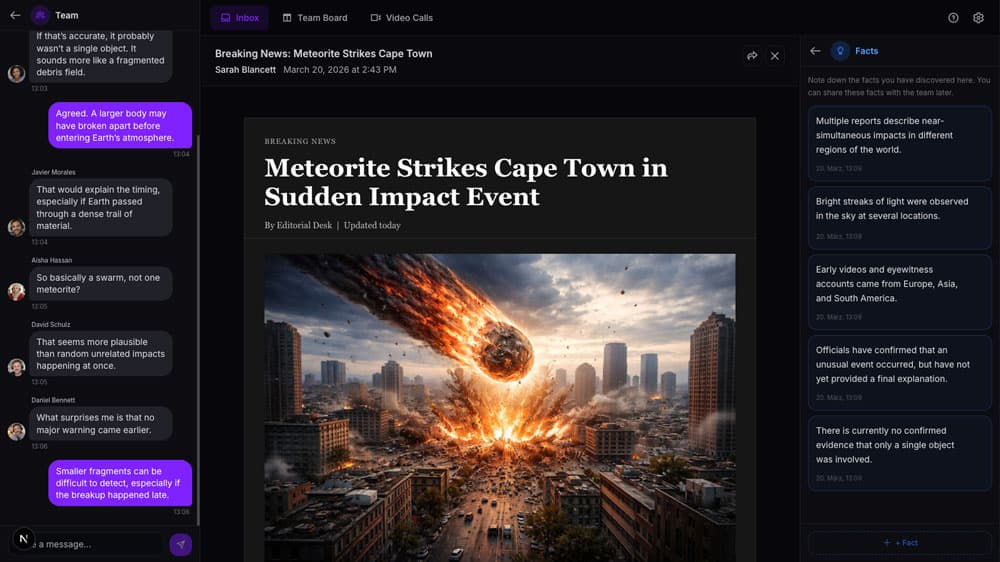
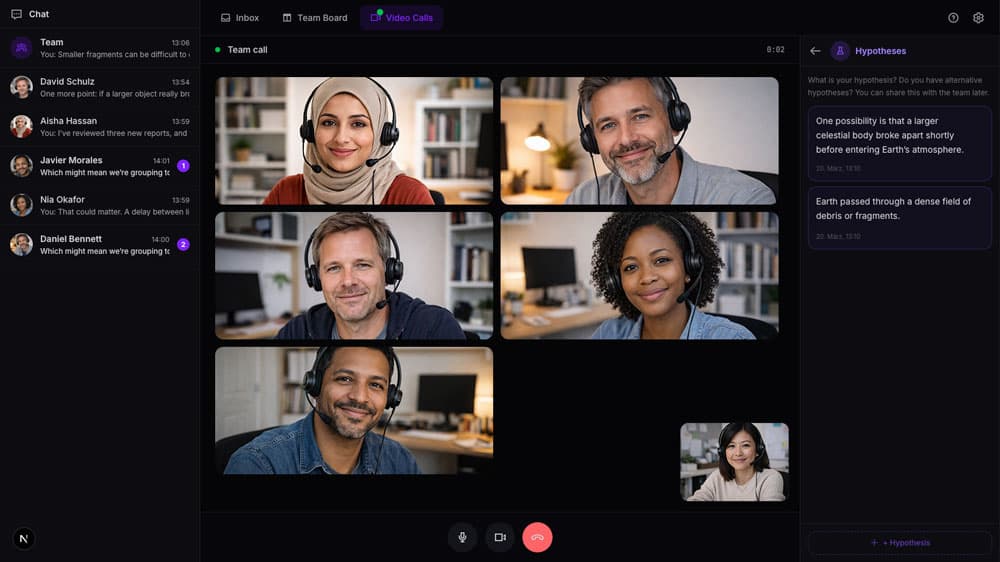
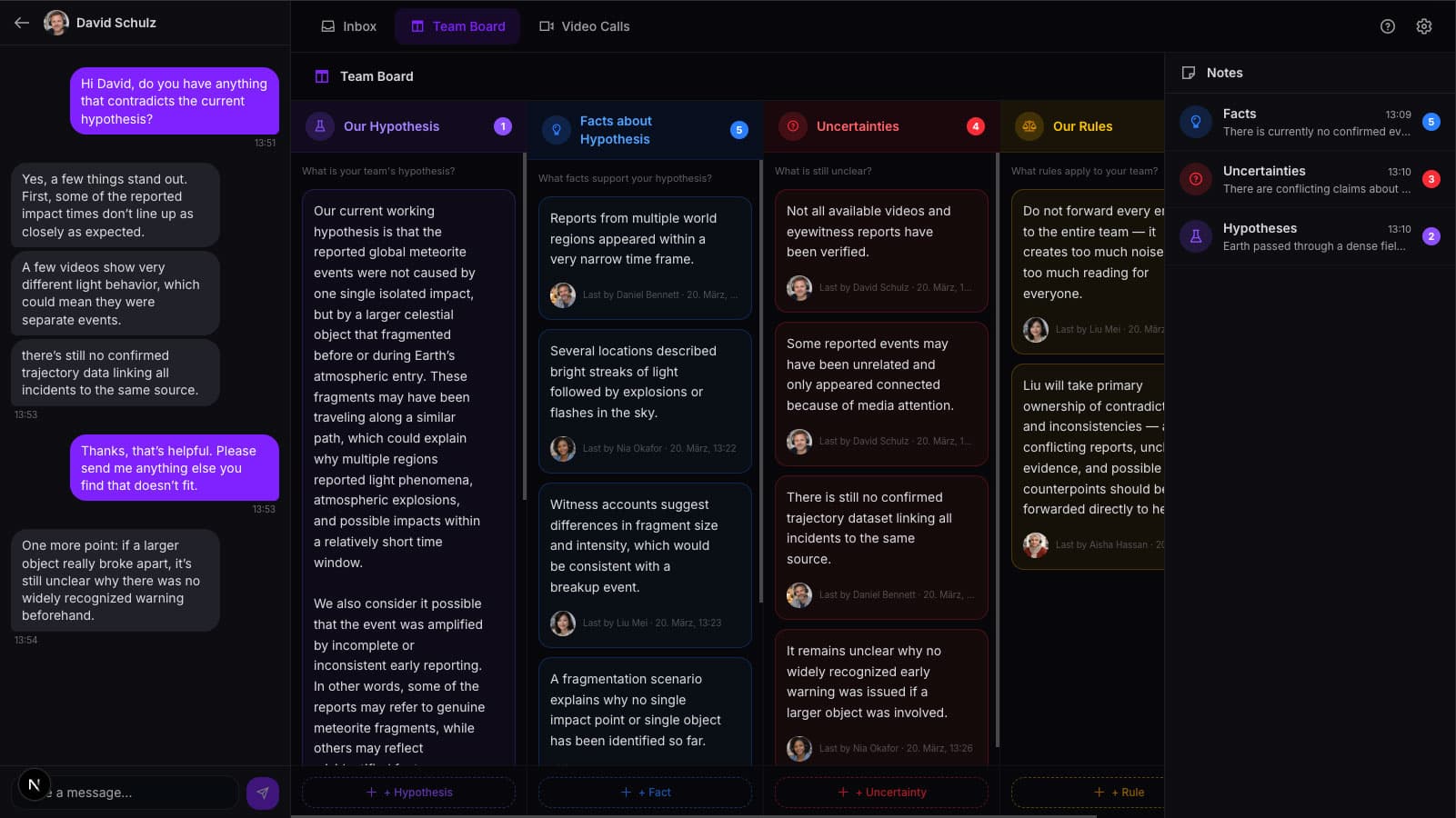
The method should not feel like a creative game concept without substance. It is deliberately grounded in two established reference models and translates their principles into observable behaviour.
Project Aristotle is a familiar reference point for many leaders when it comes to effective teams. Psychological safety, dependability, and clarity of collaboration are especially relevant here. These are exactly the principles the game is designed to make observable.
Six Conditions broadens the perspective: strong team performance depends not only on team climate, but also on a clear task, strong structure, the right norms, and supportive conditions. That makes the model especially relevant for leadership and organizational development.
This is not another survey built on strong models. It is a format designed to make those models visible in how a team actually behaves — with enough energy and engagement that teams genuinely want to take part.
In short: the rigor comes from Project Aristotle and Six Conditions. The buy-in comes from the experience. The diagnostic quality comes from observation instead of questionnaires.
The game is a means to an end: it creates a shared task under which relevant team patterns become visible.
The team solves an online mission together. That creates involvement, focus, and a natural team-event feel.
No one has the full picture on their own. The team has to share information, draw on expertise, and coordinate decisions.
What becomes visible is how the team actually handles uncertainty, priorities, disagreement, handoffs, and mistakes.
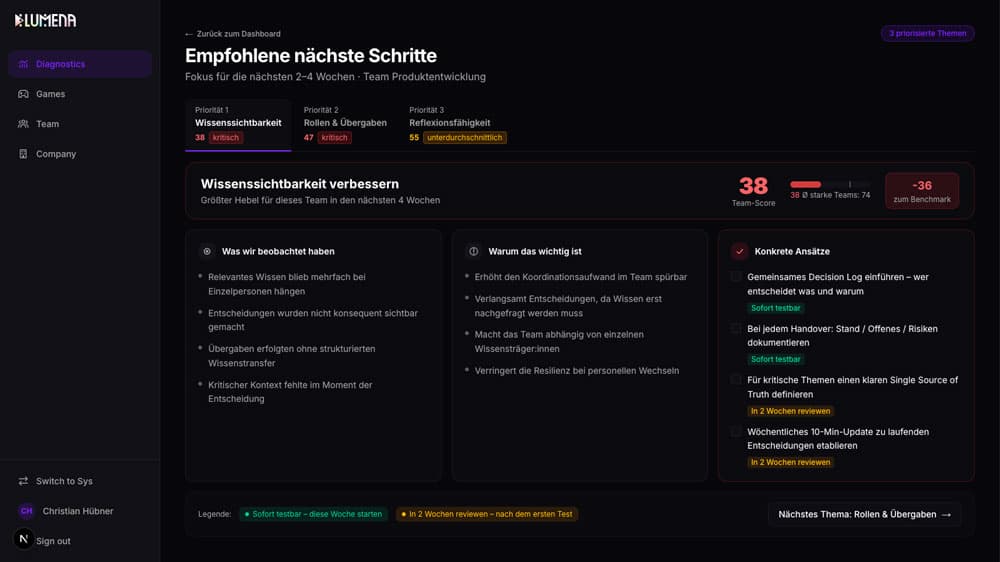
The result is not a mood check, but an understandable profile of team patterns with concrete guidance for improving collaboration.
The format does not measure personality profiles. It looks at core patterns of collaboration. The dimensions are directly informed by Google’s Project Aristotle, Six Conditions, and the underlying team science.
Shared Mental Models
Does the team quickly build a shared understanding of the situation, the priorities, and the approach?
When alignment is missing, teams can look busy without actually being coordinated. In remote settings especially, that often becomes visible only late.
Linked to: Google’s Project Aristotle (Structure & Clarity) and Six Conditions (Compelling Purpose, Sound Structure).
Transactive Memory Systems
Does the team know who to turn to for what — and use that expertise early enough?
In distributed teams, expertise is less visible. That makes silos, dependencies, and delays more likely.
Linked to: Google’s Project Aristotle (Dependability) and Six Conditions (Sound Structure, Supportive Context).
Psychological Safety
Are doubts, mistakes, and requests for help raised early — and handled constructively?
Many problems do not escalate because nobody sees them — they escalate because nobody says anything early enough.
Linked to: Google’s Project Aristotle (psychological safety) and Six Conditions (strong norms, team coaching).
Team Reflexivity
Does the team pause briefly, learn from signals, and adjust its approach effectively?
In dynamic environments, alignment alone is not enough. Teams also need to learn quickly and adjust course.
Linked to: Google’s Project Aristotle (Meaning/Impact indirectly through effectiveness) and Six Conditions (team coaching, reflection, and learning capacity).
What is distinctive here is not only what is being assessed, but how: through observed team behaviour in a shared task rather than abstract self-reporting.
An understandable team pattern profile
Not abstract scores, but a clear view of core team patterns: alignment, knowledge flow, speak-up behaviour, and learning loops.
Concrete guidance for leadership and team development
Where does friction arise? What is already working well? Which levers would have the biggest effect in day-to-day work?
A credible basis for discussion
The results can be linked back to well-known models like Google’s Project Aristotle and Six Conditions, which makes them easier to interpret internally.
A format teams are more likely to buy into
Because it does not feel like an audit, but like a shared challenge with real team-event energy.
For companies, the value is better visibility into collaboration and concrete development levers. For teams, the value is a shared and motivating experience.
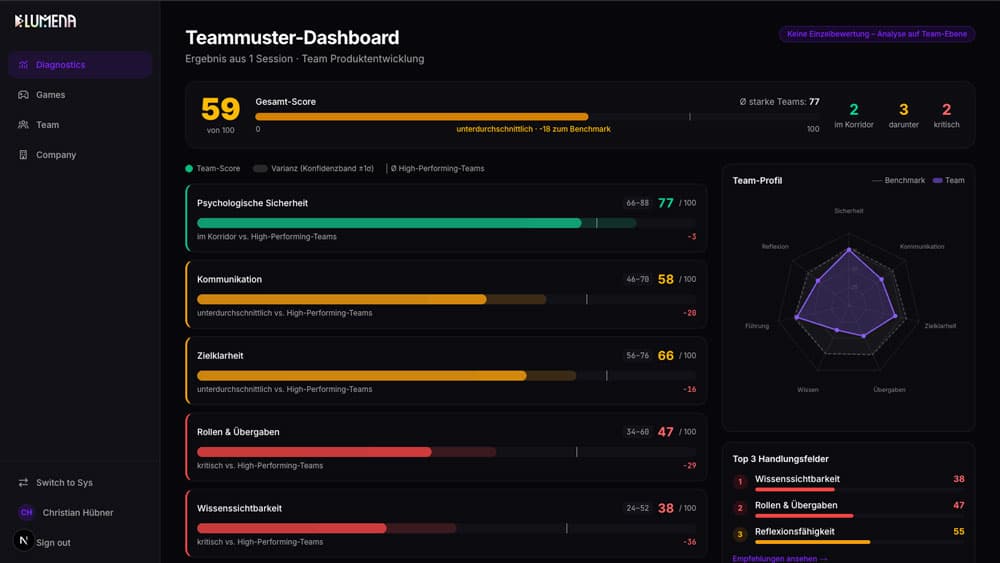
The guiding question is: how well does this team actually function under distributed working conditions — and what would make it more effective?
Evidence-based team diagnostics based on Google’s Project Aristotle and Six Conditions for Team Effectiveness — delivered as an observable, cooperative online mission with the feel of a team experience.
Both. For the team, it should feel like a strong shared challenge. For leaders and People/HR, it is a robust, observation-based team diagnostic.
Because they are familiar and credible reference points for many decision-makers. They help show that this is not just a game concept, but a diagnostic approach with a clear methodological foundation.
The key difference is observation instead of self-report. You get closer to seeing how the team actually operates on a shared task, not just how it describes itself.
An understandable team pattern profile, clear observations, prioritised development levers, and a strong basis for the next team conversations or development steps.
It is especially relevant for teams where collaboration, coordination, and knowledge work matter — particularly in remote or hybrid settings. It is less relevant if you are simply looking for a pure fun event.
Not individual people. The focus is on collective patterns of team collaboration.
I’m not looking for polite feedback. I want to know whether, as a potential buyer, you see the value: do you understand the approach, does it feel relevant, and would you seriously consider something like this for your team?
I’m trying to find out whether team leads, CEOs, and founders would see this as a genuinely valuable solution for their team — not whether the idea simply sounds nice.